Kanchanaburi Series · Episode 2
The River Kwai Today — Walking the Ground Where History Breathes
The war ended over seventy years ago. But standing on the Bridge over the River Kwai today, you can still feel the weight of every soul that built it.
The war ended over seventy years ago.
The Japanese surrendered. The Allied prisoners went home — those who survived. The jungle slowly swallowed the camps, the tools, and the bones.
But the bridge is still there.
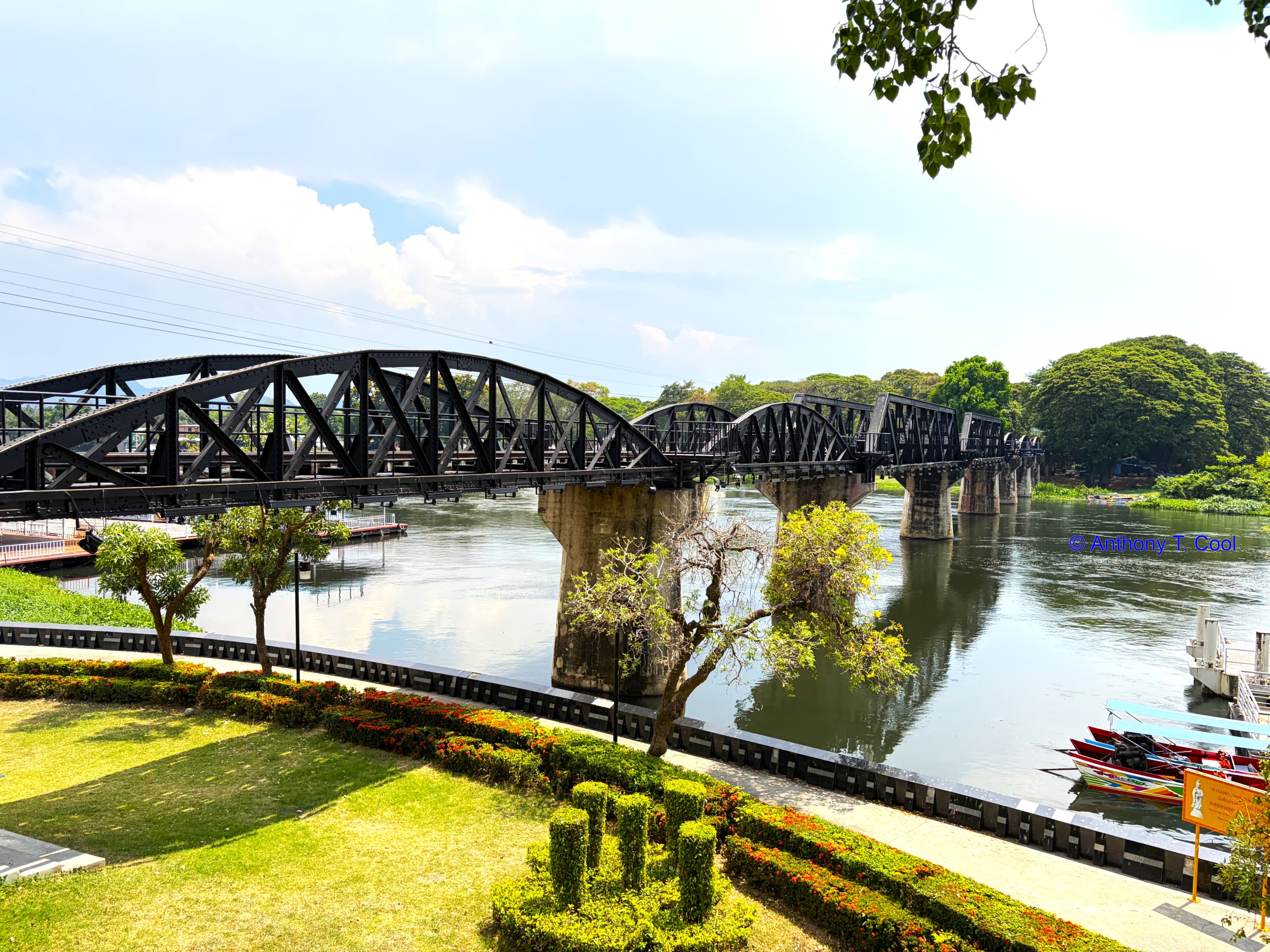
Standing on the Bridge over the River Kwai today, with the warm Thai sun on your face and the green river moving quietly beneath your feet, it is almost impossible to reconcile the beauty of this place with what happened here. The water is calm. Longtail boats drift past. Vendors sell cold drinks on the riverbank.
And yet, the weight of the place is unmistakable.
What You See When You Cross the Bridge
Most visitors arrive expecting a museum piece — something roped off, preserved behind glass, explained through laminated signs.
What they find instead is a living structure. Trains still cross it. Locals still walk across it on the narrow pedestrian walkways at the sides. You can stand in the middle, look down at the river, and touch the same iron that prisoners drove into place with their bare hands in 1943.
The original wooden bridge was replaced by the steel structure you see today, but sections of the original iron framework remain. The round-topped spans in the center are the originals — rebuilt after Allied bombing damaged the bridge in 1945. The square-topped spans at either end are the replacements.
Most people walk across without knowing which sections are which.
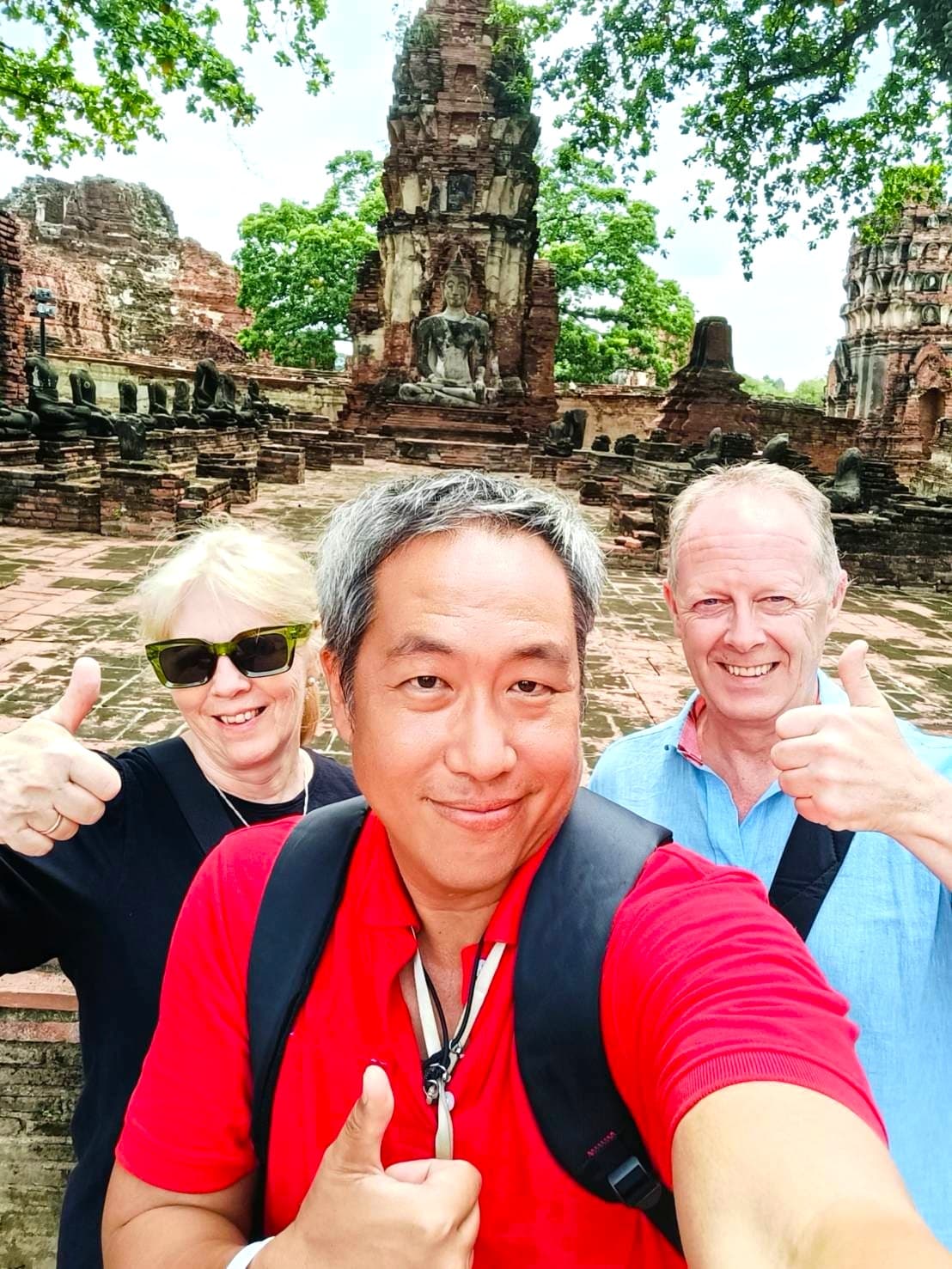
I always stop to tell my guests. It changes the way they look at the bridge entirely.
The War Cemetery: A Garden of Remembrance
A short walk from the bridge, in the center of Kanchanaburi town, lies one of the most quietly powerful places I have ever stood in.
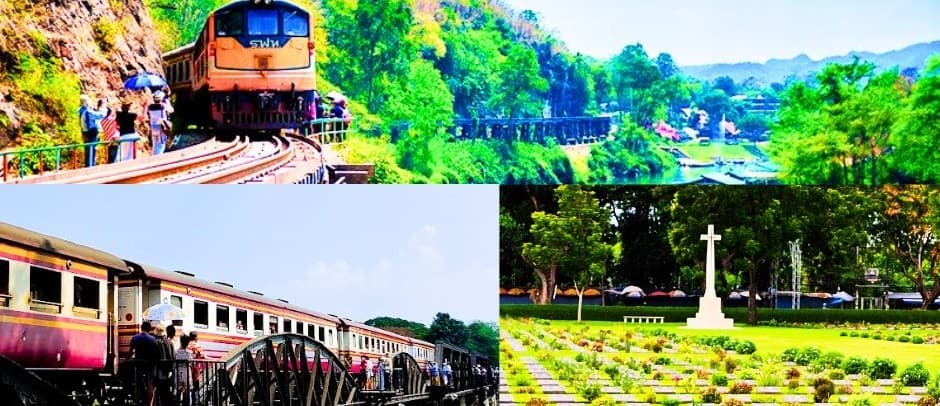
The Kanchanaburi War Cemetery contains the graves of 6,982 Allied prisoners of war — British, Australian, Dutch, and others — who died during the construction of the Death Railway.
The cemetery is immaculate. Rows of identical white stone markers stretch across a perfectly maintained lawn, each one carrying a name, a rank, a nationality, and a date. Many of the markers simply read: A Soldier of the 1939-1945 War — Known Unto God.
They were so young. Most were in their twenties.
What strikes every visitor who comes here — and I have watched hundreds of people walk through these gates — is the silence. Not the absence of sound, but a particular kind of silence. The silence of a place that has been tended with love, year after year, by people who refuse to let these men be forgotten.
Hellfire Pass: Where the Mountain Still Remembers
Further up the river, accessible by road through the jungle, is the site that stays with visitors longest.
Hellfire Pass — the Konyu Cutting — is now a memorial museum managed by the Australian government. You descend a long staircase into the gorge, and suddenly the scale of what was done here becomes viscerally real.
The walls of the cutting rise fifteen meters on either side of you. The rock is scarred with the marks of the chisels. In some places, you can still see the drill holes where charges were placed to blast the stone.
There is no dramatic lighting, no soundtrack, no theatrical presentation. Just the rock, the silence, and the knowledge of what it cost.
I have brought guests here who did not speak for twenty minutes after walking through. That silence is its own kind of tribute.
Why I Keep Coming Back
I have guided this route more times than I can count. Bangkok to Kanchanaburi, the bridge, the cemetery, the pass, the train along the cliff edge at Tham Krasae.
Every time, something different stays with me.
Sometimes it is a name on a grave marker — a young man from a small town in England who never came home. Sometimes it is the expression on a guest's face when they first step into the cutting at Hellfire Pass and realize, for the first time in their lives, exactly what human beings are capable of — both in cruelty and in courage.
Kanchanaburi is not a comfortable place to visit. It should not be.
But it is an essential one.
A Note on How to Visit
The best way to experience Kanchanaburi is slowly, with time to sit, to look, and to let the place speak to you. A rushed day trip from Bangkok is possible, but it does not do justice to what is here.
If you have the time, stay a night along the river. Walk the bridge at dusk, when the light turns gold on the water and the day-trippers have gone. Visit the cemetery in the morning, when the dew is still on the grass.
Let the place take its time with you.
Written & Photographed by Anthony T. Cool — Licensed Tour Guide & Cultural Storyteller
Join Anthony on a private full-day journey to Kanchanaburi — the Bridge, Hellfire Pass, the War Cemetery, and the Death Railway cliffside train. Contact Concierge to arrange your visit.
Continue exploring Kanchanaburi:
Written & Photographed by
Anthony T. Cool
Licensed Tour Guide & Cultural Storyteller
8+ years guiding across Thailand, Vietnam, Laos & Cambodia · Ex-G Adventures Lead Guide · 1,000+ guests from 40+ countries
Explore Siam Aura
Sacred arts, curated with care.