Wat Pho Series · Episode 2
Wat Pho: The Meaning Behind the Name
Most visitors walk through the gates of Wat Pho without ever wondering what the name actually means. The answer connects this temple to the very moment Buddhism was born.
Most visitors walk through the gates of Wat Pho without ever stopping to ask a simple question — what does the name actually mean?
It is a question I enjoy asking my guests. And the answer almost always surprises them.
What Does "Wat" Mean?
The word Wat is the Thai word for temple. You will find it everywhere in Thailand — Wat Arun, Wat Saket, Wat Phra Kaew. Every temple carries this word as its first name.
But a Wat is more than just a building. Traditionally, a Wat was the center of community life — a place of worship, education, medicine, and culture all in one. In many ways, the ancient Wat was Thailand's first university.
What Does "Pho" Mean?
This is where the story becomes truly remarkable.
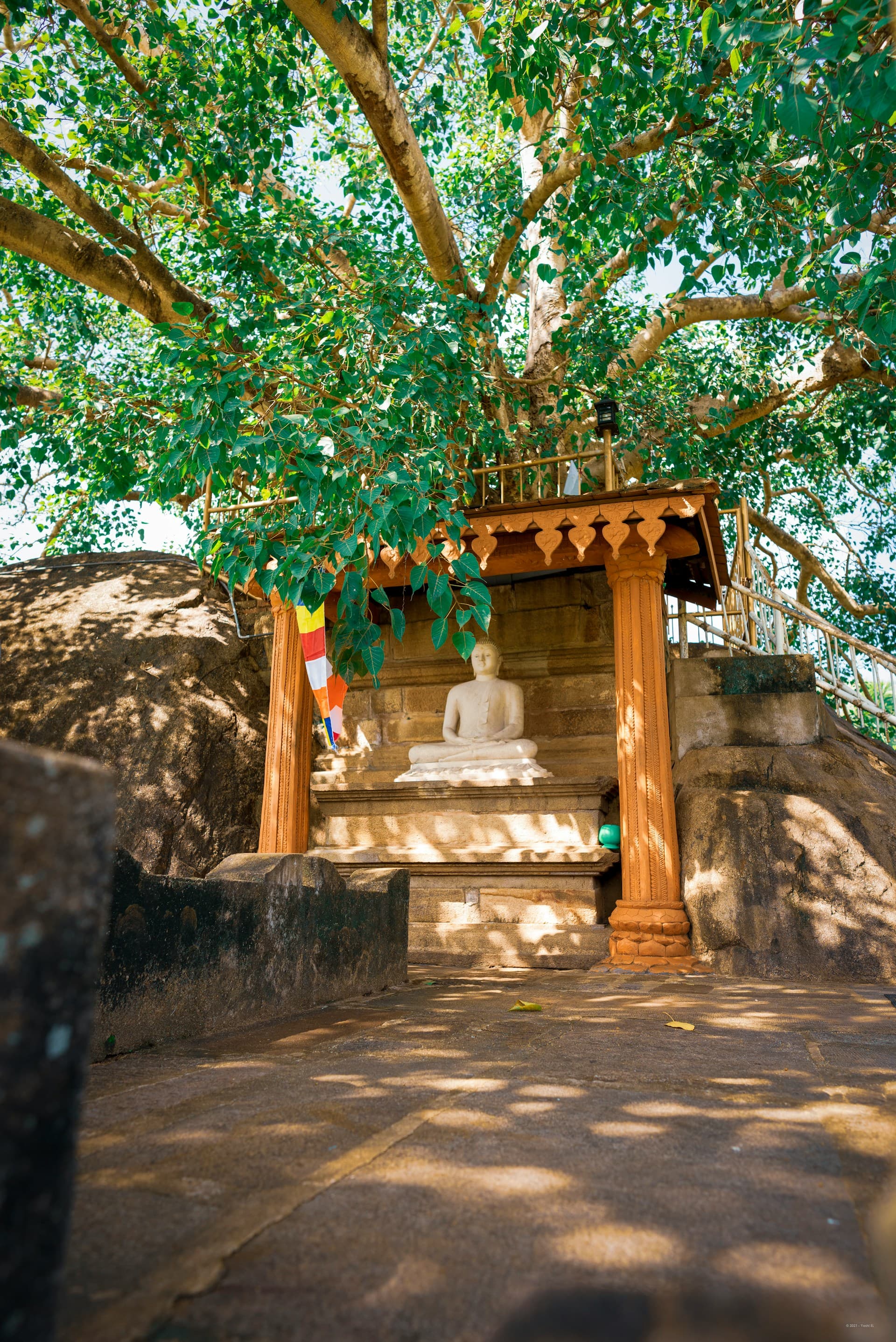
Pho is the Thai word for the Bodhi Tree — known in English as the Sacred Fig, or by its scientific name, Ficus religiosa.
And the Bodhi Tree is no ordinary tree.
The Tree Where Buddhism Was Born
Over 2,500 years ago, a prince named Siddhartha Gautama sat beneath a Bodhi Tree in Bodh Gaya, northern India. He had been searching for the meaning of human suffering for years. That night, under the shade of the Sacred Fig, he reached enlightenment.
From that moment, he became the Buddha — the Awakened One.
Before that night, the tree was known by another name — Assattha. It was only after the Buddha's enlightenment beneath its branches that it became known as the Bodhi Tree — the tree of awakening.
In Buddhist history, two Bodhi Trees hold special significance. The first is the Maha Bodhi Tree at Bodh Gaya, India — the original tree beside the Neranjara River where the Buddha attained enlightenment. The second is the Ananda Bodhi Tree at Jetavana Monastery, planted by the monk Ananda so that devotees could pay respects when the Buddha was traveling elsewhere.
In Thai belief, the Sacred Bodhi Tree from Bodh Gaya is considered the sacred symbol for those born in the Year of the Snake.
The Bodhi Tree became one of the most sacred symbols in Buddhism. For centuries, cuttings from the original tree have been carried to temples across Asia as a symbol of that enlightenment.
The Bodhi Tree at Wat Pho
Within the grounds of Wat Pho, you will find a Bodhi Tree growing quietly in one of the temple's inner courtyards. Most visitors walk right past it.
But for those who know its meaning, it is one of the most significant things in the entire temple.
The tree connects this place — in the heart of modern Bangkok — to a single moment of awakening that happened more than two and a half thousand years ago in India.
The Sacred Tree of Those Born in the Year of the Snake
In the ancient Lanna tradition of northern Thailand, every person born in a particular year carries a sacred site as their spiritual home — a place where the soul rests before birth and returns after death.
For those born in the Year of the Snake, that sacred place is the Bodhi Tree and the Mahabodhi Temple at Bodh Gaya, India — the very site of the Buddha's enlightenment.
In centuries past, traveling to India was an enormous undertaking. So the monks made an allowance — those born in the Year of the Snake could instead visit a Bodhi Tree at a temple in Thailand, offer water to its roots, or place a wooden support beneath its branches. This act of reverence, known as Tham Pee Kham Pho, is believed to strengthen one's destiny and bring peace and prosperity — like resting in the shade of a great tree.
The word Bodhi itself means awakening — a state of clarity, stillness, and freedom from suffering.
So the next time you stand beneath a Bodhi Tree at a Thai temple, you are standing beneath a symbol that carries more than 2,500 years of meaning.
So when you say "Wat Pho," you are not simply naming a temple.
You are saying: the temple of the tree where the Buddha found the truth.
That is a name worth knowing.
Next in the Wat Pho Series — Episode 3: World Leaders Who Came Here
Continue exploring Wat Pho:
Written & Photographed by
Anthony T. Cool
Licensed Tour Guide & Cultural Storyteller
8+ years guiding across Thailand, Vietnam, Laos & Cambodia · Ex-G Adventures Lead Guide · 1,000+ guests from 40+ countries
Explore Siam Aura
Sacred arts, curated with care.