Ayutthaya Series · Episode 1
Flesh, Blood, and Incantations — The Living Phantoms of Ayutthaya
Before the first strike was ever thrown in the ancient kingdom of Ayutthaya, the battle was already won in the spirit realm.
Before the first strike was ever thrown in the ancient kingdom of Ayutthaya, the battle was already won or lost in the spirit realm.
Imagine stepping onto a blood-soaked battlefield in the 16th century. The air is thick with the scent of burning incense, sweat, and impending death. Ahead of you stands a vanguard of Siamese warriors. They wear no heavy iron armor, no helmets, and no shields. They are bare-chested, their skin glistening under the tropical sun.
Yet, they look completely fearless. They look untouchable.
As you look closer, you notice their hands. They are not holding swords. Instead, their fists are wrapped tight in raw hemp ropes, coarse and rigid, deliberately dipped in thick starch and mixed with ground glass. This is the lethal art of Muay Boran (Ancient Boxing) — specifically the terrifying style of Muay Kaad Chuek. In this arena of war, a single punch does not just bruise; it tears flesh from bone.
But how could a man stand before swords, spears, and early firearms with nothing but wrapped fists? The answer lies beneath their skin and tied around their flesh.
The Unseen Shield: Armor Made of Magic
To the untrained eye of foreign traders arriving in the cosmopolitan ports of old Siam, these warriors appeared unprotected. But to the Siamese, they were encased in a spiritual fortress.
Every warrior's body was a living canvas of the occult. Before marching into battle, soldiers underwent grueling rituals of Sak Yant — the sacred art of spiritual tattooing. Monks and master sorcerers would drive long, sharpened bamboo needles into the warrior's back, chest, and head, chanting ancient Pali incantations with every puncture. These tattoos were not for decoration. They were living, pulsing grids of sacred geometry, infused with the spirits of fierce apex predators like the Tiger (Suea) or the immortal war-god Hanuman.
It was widely believed that a warrior with the right Sak Yant possessed Kong Krapan Chatree — magical invulnerability. Swords would glance off their bare skin, and bullets would misfire or flatten upon impact.
Complementing this permanent ink was the warrior's temporary, weaponized wardrobe. Tied tightly around their biceps were Pranjeat (sacred cloth armbands), and hung around their necks were Takrut — metallic scroll amulets rolled tightly by high monks, inscribed with secret protective spells. These relics were forged through intense meditation and cosmic alchemy, designed to create an invisible energy shield around the wearer.
Muay Boran: The Eight Weapons of Death
When the spiritual armor was locked in place, the physical body became a weapon of mass destruction. Unlike modern Muay Thai, which is a regulated combat sport, Muay Boran was engineered solely for military survival. It was known as the "Science of Eight Limbs" — utilizing two fists, two elbows, two knees, and two shins to mimic the weapons of war.
The Fists struck like flying cannonballs. The Elbows slashed down like heavy broadswords. The Knees pierced through defenses like iron spears. The Shins crashed into ribs like heavy wooden clubs.
Every movement was poetic yet predatory. Warriors trained to target the body's most vulnerable pressure points, mastering techniques designed to break necks, shatter joints, and paralyze enemies in a matter of seconds. They were the shadows of the King, moving with supernatural speed, driven by the absolute belief that the gods and the spirits of their ancestors were fighting through their limbs.
Walking Among the Phantoms: Ayutthaya Today
The great empire of Ayutthaya eventually fell, its golden temples burned, and its grand palaces reduced to ruins. But the ancient magic did not vanish; it simply retreated into the stones.
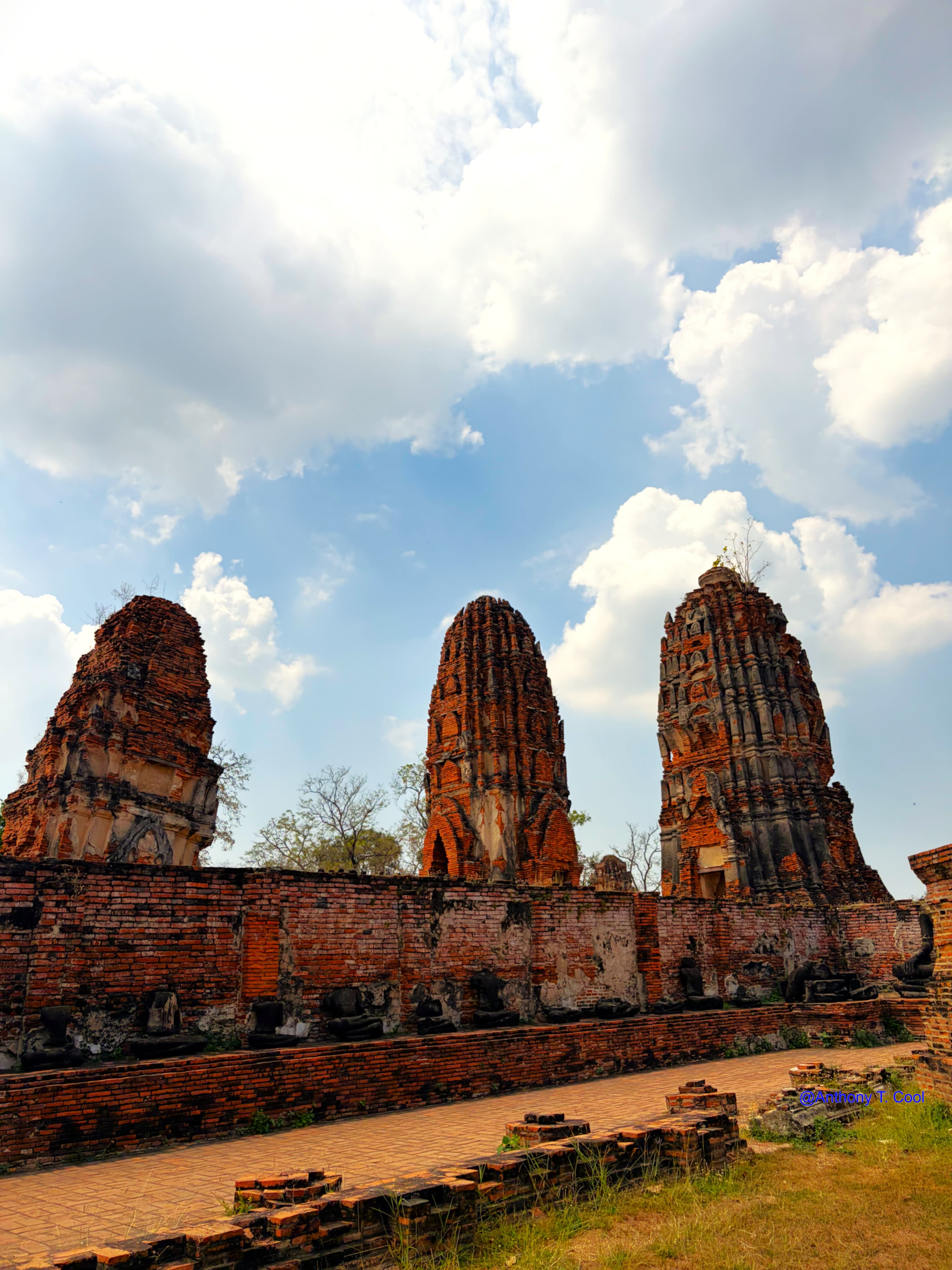
Today, the spiritual echo of these ancient vanguard fighters still vibrates through the ruins of Ayutthaya. If you walk through the grounds of Wat Yai Chaimongkol, the massive victory stupa built by King Naresuan the Great, you can still feel the heavy, stoic energy of the battle tactics once drawn up on these very grounds. At Wat Na Phra Meru, a rare temple that survived the destruction of the city, the ancient Buddha image still radiates the exact same protective Phutthakhun that warriors prayed to before wrapping their hands in hemp.
The physical warriors are gone, but their invisible armor remains. The sacred Takrut scrolls and the blessed cloths that once saved lives on the battlefield are still crafted today by lineage masters who hold the keys to Ayutthaya's ancient secrets.
To hold one of these authentic amulets is not just to own a piece of Thai history — it is to inherit the raw, unbroken spirit of the untouchable warriors of Siam.
Next in the Ayutthaya Series — Episode 2: The Crypt of the Jaturak
Continue exploring Ayutthaya:
Written & Photographed by
Anthony T. Cool
Licensed Tour Guide & Cultural Storyteller
8+ years guiding across Thailand, Vietnam, Laos & Cambodia · Ex-G Adventures Lead Guide · 1,000+ guests from 40+ countries
Explore Siam Aura
Sacred arts, curated with care.