Wat Pho Series · Episode 4
Wat Pho: Chinese Stones, Trading Ships & Thailand's First Massage School
The hidden story behind Wat Pho's Chinese stone statues, ancient trade routes, and the origins of traditional Thai massage.
Most visitors come to Wat Pho to see the Reclining Buddha.
Some admire the colorful chedis and temple halls.
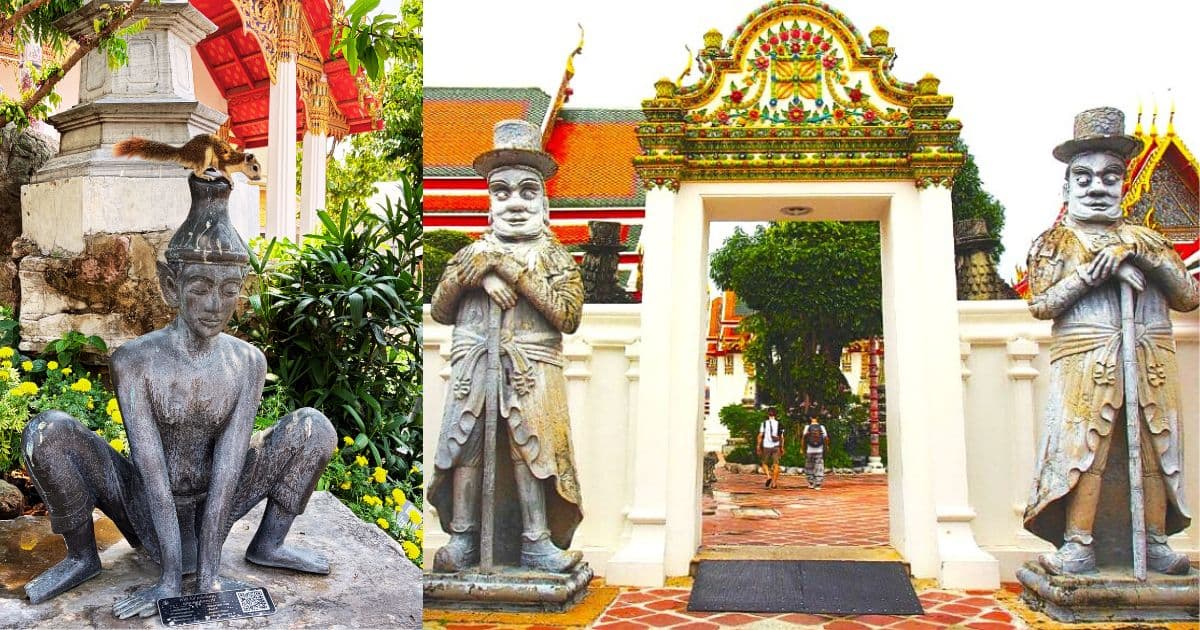
Yet few notice the stone figures quietly standing throughout the temple grounds.
These statues tell a fascinating story of ancient trade, cultural exchange, and the origins of traditional Thai medicine.
Why Are There Chinese Statues at Wat Pho?
During the early Rattanakosin period, Siam maintained strong trading relationships with China.
Chinese merchant ships often arrived carrying goods such as silk, porcelain, and tea. On their return journey, heavy stone statues were commonly used as ballast to stabilize the ships at sea.
When these ships reached Siam, many of the stone figures were unloaded and later placed around important temples, including Wat Pho.
Today, these statues remain as silent witnesses to centuries of maritime trade.
A Reminder of Ancient Trade Routes
The stone guardians and Chinese figures at Wat Pho are more than decorations.
They represent a time when Siam was connected to regional trade networks stretching across Asia.
Long before modern tourism, merchants, sailors, and travelers moved between China and Siam, bringing not only goods but also ideas, culture, and knowledge.
Walking through Wat Pho today offers a glimpse into this forgotten chapter of history.
The Hermits of Wat Pho
Among the most interesting figures at Wat Pho are the statues of hermits in stretching poses.
Known as "Rue Si Dat Ton," these figures demonstrate traditional exercises designed to improve flexibility, circulation, and overall well-being.
For centuries, Thai healers used these movements as part of traditional medical practices.
Many visitors see the statues without realizing they represent one of the earliest forms of wellness education in Thailand.
Thailand's First Public School
Wat Pho is often described as Thailand's first public university.
During the reign of King Rama III, knowledge was inscribed onto stone tablets and displayed throughout the temple grounds.
Subjects included medicine, massage, literature, history, and religion.
The goal was simple: make knowledge available to ordinary people.
This remarkable project transformed Wat Pho into a center of learning and helped preserve important Thai traditions for future generations.
Final Thoughts
Wat Pho is far more than a temple.
It is a living archive of trade, knowledge, and cultural exchange.
The next time you visit, take a moment to look beyond the famous Reclining Buddha.
You may discover stories carved in stone that connect Thailand to the wider world.
Continue exploring Wat Pho:
Written & Photographed by
Siam Aura
8+ years guiding across Thailand, Vietnam, Laos & Cambodia · Ex-G Adventures Lead Guide · 1,000+ guests from 40+ countries
Explore Siam Aura
Sacred arts, curated with care.